


The most useful paracord 550 uses are guying out a shelter, fixing broken kit, replacing a bootlace, rigging a washing line and pulling out the inner strands for fine work. The cord comes from the US military specification MIL-C-5040, where Type III must break at no less than 550 pounds. It was made as parachute suspension line, so keep it away from climbing, belaying and any load that a person’s safety depends on.
Where paracord comes from: the MIL-C-5040 specification
Paracord is short for parachute cord. The reference document is the US military specification MIL-C-5040H, “Cord, Fibrous, Nylon”, dated 17 March 1994, which superseded revision G of 30 June 1987. Its intended-use paragraph is short and clear: the cord is meant for personnel parachute suspension lines, and it is also used with various items of equipment.
A notice dated 1 October 1997 made the specification inactive for new design, so it now applies only to replacement purposes. Manufacturers and sellers still quote it whenever they call a cord “mil-spec”.
The specification covers six types, from Type I to Type IV, with very different minimum strengths. The 550 printed on most paracord packaging refers to Type III alone.
| MIL-C-5040H type | Minimum breaking strength |
|---|---|
| Type I | 95 lb |
| Type IA | 100 lb |
| Type II | 400 lb |
| Type IIA | 225 lb |
| Type III | 550 lb |
| Type IV | 750 lb |
How Type III paracord is built
Paracord pairs a braided sleeve with a core made of several strands, and that construction explains most paracord 550 uses. For Type III, the construction table in the specification calls for 7 to 9 core ends. Each core yarn is plied twice: five 210-denier yarns make a 1,050-denier yarn, then three of those are plied together for a final core size of 3,150 denier. The sleeve is braided on 32 or 36 carriers, at 26 to 28 picks per inch.
The material is fixed as well. The specification asks for a bright, high-tenacity, light-resistant and heat-resistant polyamide made from hexamethylenediamine and adipic acid, with a melting point of at least 244 °C. After exposure to light and heat, the cord may lose no more than 15 percent of its original breaking strength.
Type III must also stretch by at least 30 percent before breaking and give at least 225 feet of cord per pound. Unless a buyer specifies otherwise, its colour is natural, and coloured cord has to be dyed at the yarn stage.
More articles on WildSurvival
- Quinzhee Snow Shelter: How to Build One That Holds
- Stevenson Trail: Walking the GR70 With or Without a Donkey
- Microspikes: Choosing Winter Traction for Icy Trails
What the specification demands in the factory
MIL-C-5040H also controls how the cord is made. Core yarns must be wet shrunk for at least 60 minutes at 93 °C, plus or minus 3 °C, then dried without going above that temperature. Sleeve yarns go through the same treatment for at least 30 minutes at 71 °C. None of the yarns may be stretched, oiled or bleached.
Joins in the core are tightly controlled too. Two core yarns may overlap by more than 5 inches and no more than 10 inches, while splicing or knotting the core is not allowed. Overlaps must sit at least 100 feet apart, and each one is marked by a bright red thread run under the sleeve, white on camouflage green cord. Chloroform-soluble matter may not exceed 2 percent, so nothing can be added just to make the cord heavier.
Those rules explain why compliant cord is so consistent from one metre to the next. They describe a parachute line, though, and say nothing about holding a person, which is where the makers draw their own line further down. Keep that in mind when you weigh up paracord 550 uses that involve real loads.
Mil-spec or commercial: what makers list
On the shop shelf, the product sheet is the best guide to what a hank actually contains. The American manufacturer Atwood Rope lists the following for its 550 paracord: a 5/32-inch (4 mm) diameter, a 550 lb (249 kg) tensile strength, 8 oz (227 g) per 100 feet, a 7-strand core, described on the page as “8 lines in 1” once the sleeve is counted, UV and rot resistance, colour that will not run or bleed, and US manufacture.
Before you buy, check three things on the label: the number of core strands, the material and whether the MIL-C-5040H specification is named. Those details let you compare two hanks that print the same 550 on the packaging, and they tell you which paracord 550 uses the cord is actually suited to. If the label lists none of them, treat the hank as a general-purpose line and keep it for light camp jobs.
Paracord 550 uses around camp
Shelter comes first among paracord 550 uses. The cord makes good guylines for a tarp or tent, and a ridgeline strung between two trees. Our guide on how to pitch a tarp walks through five setups where those lines earn their place. A handful of knots covers the job for most paracord 550 uses, and our article on essential knots and rope skills sets out the main ones.
One small habit speeds up pitching: before you leave home, tie a length of cord to every guy point on your tarp or tent. On site you only have to tension the lines, which saves cutting and tying knots with cold fingers or by headtorch.
Repairs are the next of the everyday paracord 550 uses. A snapped bootlace can be swapped for a length of cord, a torn pack loop can be rebuilt with a few wraps, and a lost zip pull can be replaced with a knotted tail. Our guide to gear repair on the trail covers what belongs in a small repair kit.
Some paracord 550 uses only show up once camp is pitched. In the evening, a length tied between two trees becomes a washing line for wet socks and layers. Other paracord 550 uses include hanging a food bag, lashing gear to the outside of a pack and making a lanyard for a knife or a torch. A short spare length kept in the lid pocket covers most of these small jobs without unpacking the whole bag, and a second one in the repair kit gives you a backup when the first goes into a guyline.
Then there are the inner strands. Among the less obvious paracord 550 uses, pull the core out of the sleeve and you have several thin threads for stitching a tear, whipping a handle or serving as a fine line. The rope maker Sterling Rope notes on the page for its 550 Type III parachute cord that the core strands are white, which makes them easy to spot once the sleeve is open.
Cutting, sealing and carrying your cord
Cut paracord frays quickly if the end is left raw. Nylon melts with heat, so you can seal the end with a lighter flame: warm the cut gently until the sleeve and core fuse together, then let it cool before you touch it, since molten nylon stays hot.
Do your cutting at home, where you have time and light. A turn of tape around the cord marks the cut, and a sharp blade leaves a clean end that seals neatly. Pre-cut, sealed lengths make the quick paracord 550 uses in camp genuinely quick.
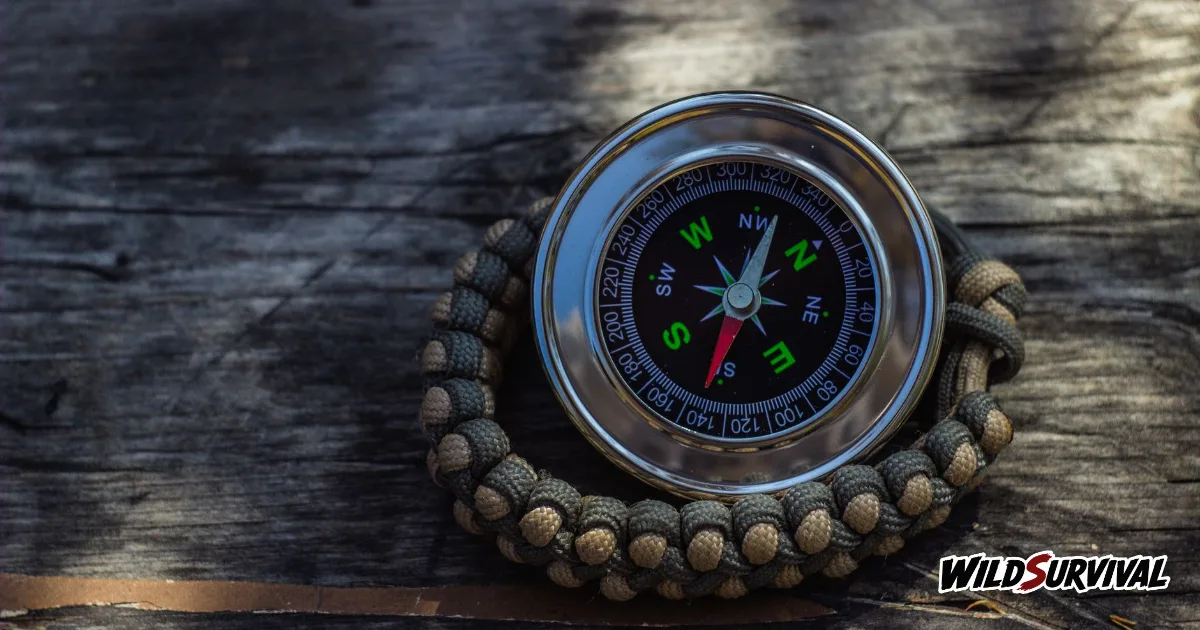
For carrying, a tight hank sits at the bottom of a pack, and a length braided into a bracelet rides on your wrist. A bracelet saves space, but you have to unpick the whole weave to use the cord, which takes time at exactly the moment you need it. That trade-off shapes which paracord 550 uses you can count on at short notice.
Carry several pre-cut lengths alongside one longer hank, so you are not cutting into your reserve every time. A bright colour is easier to find in grass or snow, while a muted one blends into the campsite.
Paracord 550 uses that cross the line: climbing and life safety
Paracord belongs in the camp kit. Sterling Rope, which also makes climbing ropes, states it plainly on that same product page: accessory cords are not for use as lead climbing ropes. The same maker describes its smaller cords as suited to applications that do not involve life safety, such as tie-down straps or braided bracelets.
The specification points the same way. It sets a minimum breaking strength of 550 lb, which Sterling Rope gives as 2.4 kN, and a minimum elongation of 30 percent. Those are the numbers of a parachute suspension line, and they say nothing about catching a fall.
In practice, leave paracord out of descending steep ground, belaying a partner, hauling a person or hanging a hammock whose working load you do not know. For those jobs, use a rope or webbing rated for life safety, and keep the paracord for guylines, repairs and the washing line.
Paracord 550 uses at a glance
| Topic | In practice |
|---|---|
| Specification | MIL-C-5040H, Type III, 550 lb minimum breaking strength |
| Construction | Braided nylon sleeve, 7 to 9 core ends under the specification |
| Uses | Shelter guylines, repairs, laces, washing line, inner strands |
| Care | Ends sealed with a flame, lengths stored separately |
| Limits | No climbing, belaying or lifting people |
Paracord earns its place in every pack, from pitching camp to a last-minute fix. Carry a few lengths, learn two or three knots, and save the loads that matter for a rope rated to hold a person.