


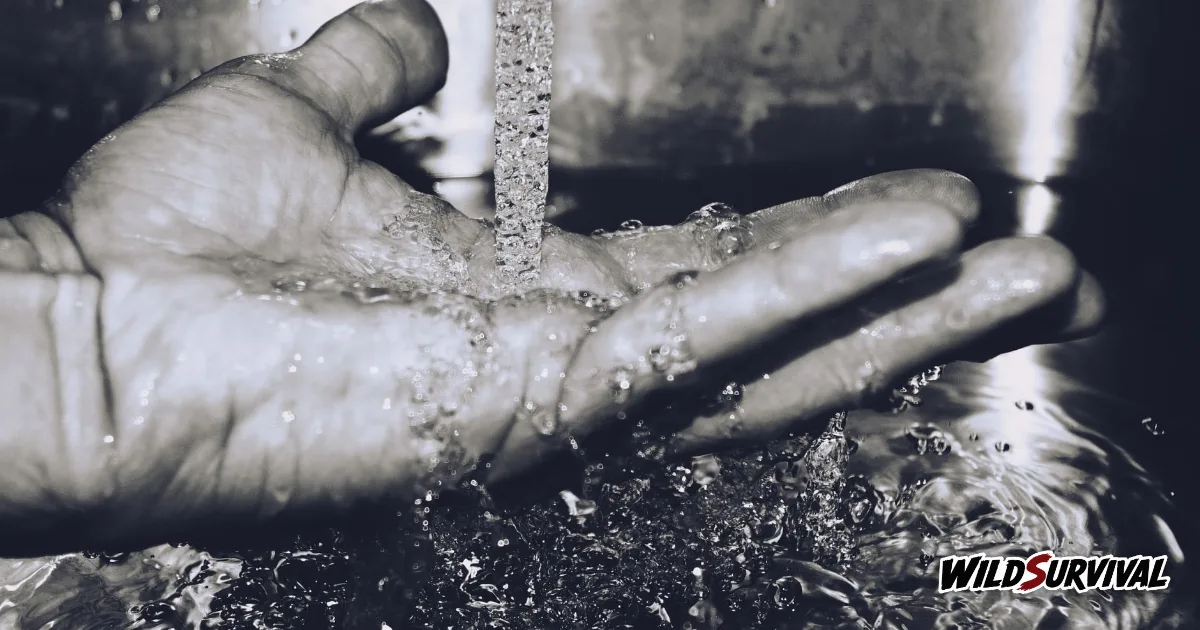
Treating burns outdoors starts with water: hold the burn under cool running water for 20 minutes, as the NHS advises, and start as soon as you can. Then remove anything tight near the burn, cover it loosely with cling film or a clean plastic bag, and call 999 or 112 if the burn is large, deep, on the face or caused by chemicals or electricity. On the trail, the hard part is usually finding enough water and keeping the casualty warm while you use it.
Treating burns outdoors begins with 20 minutes of cool water
The NHS page on burns and scalds says to hold the burn under cool running water for 20 minutes, and to do it as soon as possible, within 3 hours of the injury. St John Ambulance gives the same minimum in its severe burn first aid guide: keep cooling for at least 20 minutes or until the pain feels better.
Running water is the scarce resource when treating burns outdoors. The NHS says cool bottled water or a wet towel will do when there is no tap, so pour from your bottle or hydration bladder in a slow, steady stream and pool the group’s supply to cover the full 20 minutes. The British Red Cross burns advice goes further and suggests milk, soft drinks or beer when cold running water is not available, which shows how much the cooling matters.
There is a limit, though. St John Ambulance warns against over-cooling the casualty, because it can drop their body temperature to a dangerous level and cause hypothermia. On a cold, wet hillside, cool the burn and keep the rest of the person wrapped up and off the ground. Our guide to recognizing and treating hypothermia lists the warning signs to watch for while you pour.
Take off rings, watches and boots before the swelling starts
St John Ambulance asks you to carefully remove any jewellery, watches, belts, shoes or burnt clothing before the area begins to swell. Anything stuck to the burn stays where it is: the NHS, St John Ambulance and the British Red Cross all say not to pull off clothing that has stuck to the skin.
On a camping trip, that list often means a hiking boot, a sock or a watch strap after a stove accident. Loosen and remove them early, while the casualty can still move the limb without too much pain, and set them aside where they will not get lost in the dark. Explain what you are doing as you go, and work slowly around the burnt area so you never brush against it, since St John Ambulance asks you not to touch the burn.
More articles on WildSurvival
- Quinzhee Snow Shelter: How to Build One That Holds
- Stevenson Trail: Walking the GR70 With or Without a Donkey
- Microspikes: Choosing Winter Traction for Icy Trails
Covering a burn with cling film or a plastic bag
Once the burn has cooled, the NHS says to lay cling film over it without wrapping it around the limb. St John Ambulance describes the method in more detail: throw away the first two turns of the roll, then lay a fresh piece lengthways over the burn and secure it with a bandage or tape that stays off the damaged skin. The British Red Cross accepts a clean plastic bag, which is handy for a burnt hand.
A short length of cling film folded flat weighs almost nothing, and a clean zip-lock bag already lives in most packs. Both are worth adding to your first aid kit if you cook on a stove or sit around a fire.
What to avoid when treating burns outdoors
When treating burns outdoors, old remedies do more harm than good. The NHS says not to put creams, oils or butter on a burn, and the British Red Cross adds that butter, cream or toothpaste will not cool the area. St John Ambulance rules out ice, creams and gels, and asks you to avoid touching the burn at all.
Leave blisters alone. The NHS says not to burst them, and St John Ambulance repeats the same advice. Skip plasters and sticky dressings too, since the British Red Cross warns that adhesive bandages stick to the skin and can cause further damage.
For pain, the NHS suggests painkillers such as paracetamol or ibuprofen. Check the label and any medicines the casualty already takes before handing them over.
Treating burns outdoors also means leaving the contents of your wash bag alone. Sun cream, lip balm and moisturiser all count as the creams the NHS asks you to keep off a burn, however soothing they might look at the time.
When a burn needs 999, 112 or A&E
The NHS lists the burns that need a 999 call or a trip to A&E: a burn that is very large or deep, one on the face, genitals or bottom, and any burn caused by an acid, a chemical or electricity. St John Ambulance gives both numbers, 999 or 112, and suggests that someone else makes the call so you can keep cooling the burn.
St John Ambulance also looks for difficulty breathing and signs of shock, and describes shock after a severe burn as a life-threatening condition. While you wait, reassure the casualty and keep them warm. If your phone has no signal, our guide on how to signal your position without a phone covers whistles, mirrors and other ways to draw attention.
For smaller burns, the NHS says many can be treated at home and can take around 2 weeks to heal. If you are not sure what to do, it points you to NHS 111, and it advises calling 111 for any child under 5 with a burn.
Getting a burnt walker off the hill
In a group, treating burns outdoors works best when each person has one job. One pours water, one makes the call and one keeps the casualty warm and talks to them. St John Ambulance recommends exactly that split for the phone call, so the cooling never stops while someone dials 999 or 112.
If the casualty needs A&E, the NHS asks them not to drive themselves. Someone else drives, or you call 999 for an ambulance, and the casualty brings any medicines they take. From a trailhead car park, that means sorting out a driver before you reach the car, while the burn stays covered and the casualty stays warm.
On a longer walk-out, share out the casualty’s load so they can protect the burnt area, and keep checking for the signs of shock and difficulty breathing that St John Ambulance lists. If either appears, stop and call for help from where you are.
Chemical and electrical burns on a trip
The NHS puts acid, chemical and electrical burns straight into the emergency category, whatever their size. When treating burns outdoors, think of a leaking fuel canister, a cleaning product in a camper van or a damaged power bank, and treat any of these burns as serious from the outset.
St John Ambulance keeps a separate page for chemical burns, and it is worth reading before a trip where you carry anything stronger than soap. In every case, protect yourself first and call for help early.
Packing for treating burns outdoors
Most of what you need for treating burns outdoors is already in a well-packed bag. Carry more water than you plan to drink, a strip of cling film or a clean plastic bag, a few sterile dressings, a warm spare layer for the casualty and a charged phone.
Run through the steps for treating burns outdoors at home, with the people you walk with, so nobody hesitates when the water needs pouring. Prevention matters just as much. Set your stove on firm, level ground, cook outside the tent and keep children well away from pans of boiling water. Those habits cost nothing and take the obvious camp hazards off the table.
Treating burns outdoors at a glance
| Step | What to do |
|---|---|
| Cool | Cool running or bottled water for 20 minutes, within 3 hours, without chilling the casualty |
| Remove | Jewellery, watches, belts, shoes and loose burnt clothing, leaving anything stuck |
| Cover | Cling film laid over the burn, or a clean plastic bag on a hand |
| Avoid | Ice, butter, creams, toothpaste, plasters, bursting blisters |
| Call | 999 or 112 for large, deep, facial, genital, chemical or electrical burns |
Treating burns outdoors comes down to the first few minutes. Keep spare water, carry cling film, and read the warning signs at home so the right decision comes quickly on the trail.