


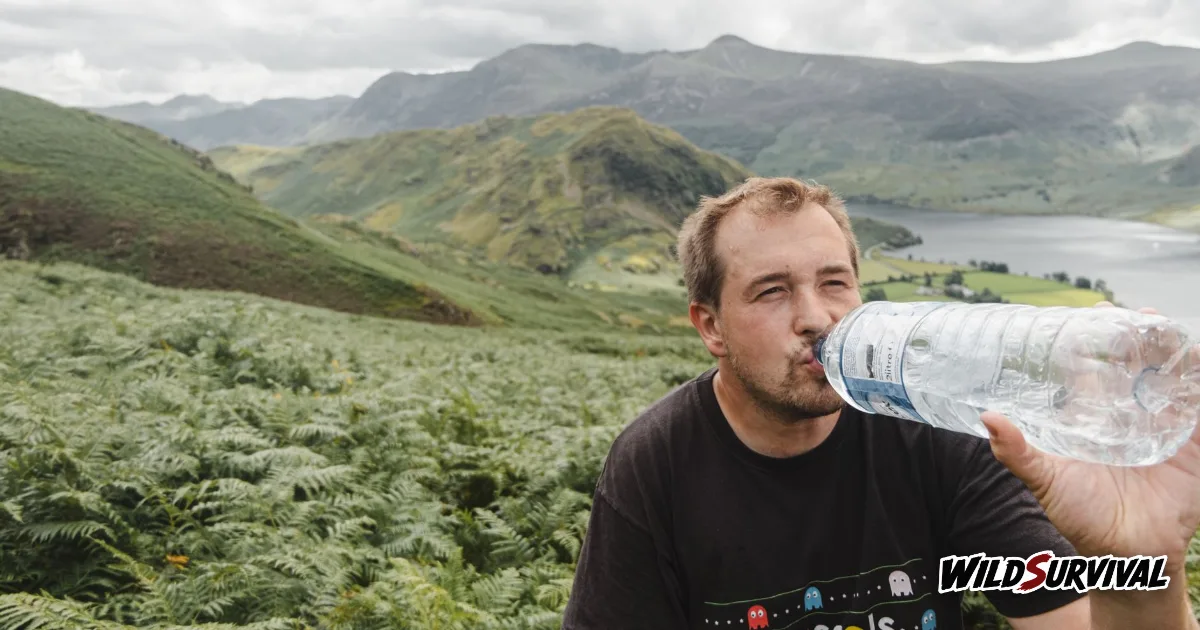
How much water you need on a hike depends on the heat, your pace and your own sweat rate, but the French hiking federation treats 1.5 litres as a sensible minimum for an ordinary walk of several hours and puts a full day at around 3 litres. Hot weather can push that far higher. The aim is to keep sweat losses below 2 % of your body weight while drinking to thirst, because forcing down water past that point carries its own risk, hyponatraemia.
How much water your body needs at rest and on the move
To judge how much water you need, start with the baseline. The European Food Safety Authority set adequate intakes in 2010 of 2.0 litres of total water a day for women and 2.5 litres for men. Those figures include water from food as well as drinks, and EFSA says they only apply at moderate temperatures and moderate activity. A day on the hill sits well outside that range, so how much water you drink on the trail has to go up.
The French hiking federation, the FFRandonnée, starts from energy use: three hours of walking on the flat burns around 1,000 kcal, which it links to roughly 1.25 litres of water to replace. Over a full day it puts how much water you need at 3 litres on average. Heat changes everything. The federation cites needs of 9 to 14 litres a day in a hot desert, and the US National Park Service’s Grand Canyon hiking advice warns that hikers can lose one or two litres of water an hour in summer heat.
In hot weather, timing helps as much as volume. Start early, tackle the longest climbs in the cool of the morning, take your breaks in the shade at midday, and keep eating salty snacks as the Park Service suggests. On a day like that, check how much water is left at every stop and turn back before the bottles run low.
When to drink: ahead of thirst or to thirst
The advice is not unanimous, and it helps to know why. The FFRandonnée recommends a few sips every half hour over large amounts at each stop, and says not to wait until you are thirsty. The National Park Service also tells hikers in the heat to sip regularly even if they do not feel thirsty.
The Wilderness Medical Society takes a different line. In its 2020 guidelines on exercise-associated hyponatraemia, summarised by the American Academy of Family Physicians, it says that no specific fluid volume has been shown to prevent the condition, and that the best advice is to drink in response to thirst. The usual cause, it adds, is overdrinking water or sports drinks.
In practice, both camps agree on small, regular amounts with no forcing. If you are thirsty, drink. If you feel bloated and not thirsty while drinking a lot, ease off, since the society lists bloating and lack of thirst among the signs that can point to hyponatraemia. Keep a bottle in a side pocket or a reservoir hose on your shoulder strap so you can sip on the move, and you will rarely need to gulp a litre at a stop.
More articles on WildSurvival
- How to Read a Topographic Map: Contours, Scale and Grid
- Hiking in the Rain: How to Stay Dry and Safe
- How to Identify Trees: Leaves, Bark, Buds and Fruit
Spotting dehydration and hyponatraemia
The NHS lists the signs of dehydration as feeling thirsty, a headache, feeling dizzy or light-headed, tiredness, a dry mouth, lips and tongue, sunken eyes, and dark yellow, strong-smelling pee passed less often than usual. Its simple target is pale, clear yellow urine. The FFRandonnée adds that a water deficit of 2 % of body weight cuts energy by 20 %.
Hyponatraemia is the opposite problem, blood that has become too dilute. The Wilderness Medical Society defines exercise-associated hyponatraemia as a sodium level below 135 mmol per litre during prolonged activity or within 24 hours after it. The National Park Service lists fatigue, nausea, vomiting, confusion, altered mental state and frequent urination among its symptoms. Some overlap with dehydration, which is why knowing roughly how much water you have drunk that day matters.
Working out how much water you personally need
The American College of Sports Medicine recommends tailoring fluid intake to the individual, by estimating your own sweat rate from your weight before and after exercise. You can do it at home on a familiar walk. Here is a worked example to redo with your own figures.
| Step | Example |
|---|---|
| Weight at the start | 70.0 kg |
| Weight at the end, after 3 hours of walking | 69.0 kg |
| Water drunk on the way | 1.0 litre |
| Water lost as sweat (1 kg lost + 1 litre drunk) | about 2 litres, or about 0.67 litres an hour |
| ACSM 2 % threshold at 70 kg | 1.4 kg |
In this example the walker lost 1 kg, below the 1.4 kg threshold, so their drinking was about right. Repeat the test on a hot day and a cool one to see how much water your own body asks for in each.
Salt, electrolytes and treating water on the trail
On a long day, sweat carries salt away too. The ACSM notes that drinks containing electrolytes and carbohydrate can offer benefits over water in some circumstances. The Wilderness Medical Society advises having sodium-rich food and drink available during long efforts in high heat, while stressing that they will not prevent hyponatraemia if you overdrink. Our guide to trail food on a multi-day hike covers salty snacks that travel well.
Water from streams needs treating. The US Centers for Disease Control and Prevention recommend a rolling boil for one minute, or three minutes above 6,500 feet, about 2,000 metres, or filtering through a filter with a pore size of 1 micron or smaller and then disinfecting. The CDC adds that chemical treatments kill viruses and bacteria but may leave some parasites alive. Our guides to filtering water outdoors and purifying water without a filter go through each method.
To decide how much water to carry, start from your walking time, which our walking time guide helps you estimate, multiply it by your measured sweat rate, add a margin for heat and mark the streams and huts where you can refill. Common hydration reservoirs such as the CamelBak Crux come in 1.5, 2 and 3 litre sizes, so match the size to how much water the stretch to the next refill demands. Set off with enough to reach the next safe refill, sip little and often, and check the colour of your urine in the evening to see whether the day was well judged.