

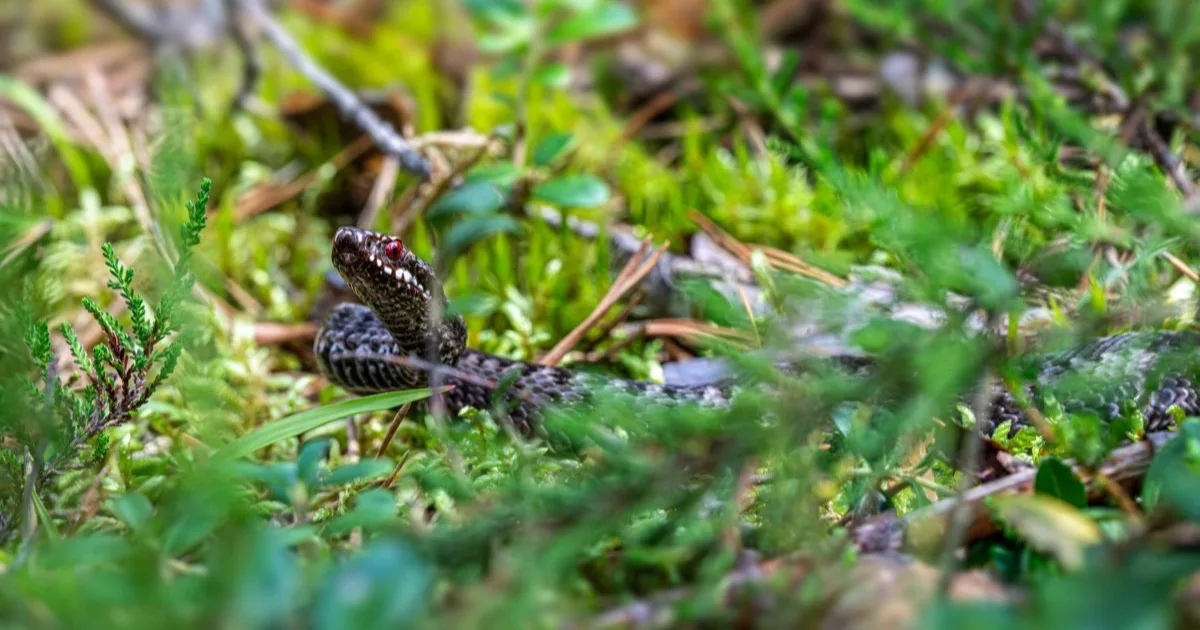
After an adder bite, call 999, keep the person as still and calm as possible, keep the bitten limb still and take off rings, watches and anything else that could tighten as it swells. Do not suck the wound, do not apply a tight tourniquet and do not give aspirin or ibuprofen; paracetamol is the painkiller the NHS allows. That is the NHS advice for snake bites in the UK, and every bite should end in hospital, where staff watch for symptoms and give antivenom if it is needed.
The adder and the real size of the risk
The NHS page on snake bites describes the adder as the only venomous snake living wild in the UK. It is grey or reddish-brown with a dark zig-zag stripe running down its back, the marking that helps tell it apart from the other snakes found in Britain.
Bites are uncommon. The Amphibian and Reptile Conservation Trust, a wildlife charity whose figures draw on NHS and poisons service data, estimates around 50 to 100 adder bites to people each year in Great Britain. It also counts 14 formally recorded human deaths from those bites since 1876, the last one in 1975. The NHS puts it simply: most snake bites in the UK are not serious.
Low numbers are no reason to wait and see. An adder bite that injected venom and one that did not can look much the same in the first minutes, and only medical monitoring tells them apart.
First aid for an adder bite, step by step
Start by getting away from the snake. The NHS is clear that you should not go near the snake or try to catch or kill it.
Then call 999. While you wait, keep the person lying or sitting still, and keep the bitten arm or leg as still as you can. The aim is to limit movement, and a sling or a rolled jacket can keep the limb from shifting while you wait.
Take off rings, bracelets, watches and, for a bite on the foot or ankle, the boot and sock. Swelling can come on quickly, and a ring that will not come off later works like a tourniquet nobody meant to apply.
For pain, the NHS says paracetamol is fine. Aspirin and ibuprofen are on its list of things to avoid. A well-stocked first aid kit covers cleaning, a sling and the right painkiller, but it does not replace the trip to hospital.
One habit from French clinical advice is worth borrowing. Professor Patrice Bourée, writing in La Revue du Praticien, recommends marking the edge of the swelling with a pen and noting the time. When the ambulance crew arrives, that line shows at a glance whether the swelling is spreading.
More articles on WildSurvival
- How to Use a Compass With a Map in Three Steps
- Hiking the GR20 in Corsica: Stages, Booking and Supplies
- Wild Camping in France: Bivouac Rules, Parks and Fires
What not to do after an adder bite
Several reflexes from old survival manuals do more harm than good. The NHS and French public health guidance agree on the list:
- A tight tourniquet, which cuts off blood flow; Professor Bourée links it to a risk of gangrene.
- Sucking out the venom, by mouth or with a suction pump.
- Cutting the wound, which adds an injury and an infection risk to the bite.
- Aspirin or ibuprofen, which the NHS rules out.
These steps feel like action and often delay the call for help. Every minute spent on them is a minute taken away from getting the person to hospital, which is where the only real treatment is given.
Adder bite signs that mean it is getting worse
An adder bite with venom usually starts with pain and swelling around two small puncture marks. French regional health authority guidance describes general symptoms that can appear anywhere from 30 minutes to several hours later: nausea and vomiting, feeling faint with a drop in blood pressure, and in some cases facial weakness or blurred vision.
That delay is the reason someone who feels fine straight after an adder bite still needs to be seen. The NHS says hospital staff will usually keep the person in for at least 24 hours to watch for symptoms, and that antivenom is given through a drip into a vein if it is needed.
While you wait for the ambulance, keep checking the pen line, the time and how the person feels, and pass all of it to the crew. A description of the snake helps too, as long as you saw it without getting closer.
If the bite happens while walking in France
British walkers heading to the Alps, the Pyrenees or the Massif Central meet two vipers instead of one. The regional health agency for Auvergne-Rhône-Alpes describes the asp viper in the south of France and the adder in the north as the only venomous snakes living wild in mainland France. The first aid is the same: keep still, take off anything tight, call for help on 112 and get to hospital.
French hospitals use an antivenom called Viperfav. Its official entry in the French public medicines database lists it for grade II and grade III envenomations, where swelling spreads across the limb or beyond it towards the trunk, or where general symptoms such as vomiting, diarrhoea, abdominal pain or low blood pressure appear. It covers asp viper, adder and nose-horned viper venom, is given by intravenous drip and is reserved for hospital use.
The same agency recommends at least six hours of hospital observation after a bite, and the pen line on the skin is just as useful to a French emergency team as to a British one.
Planning a walk against the risk of an adder bite
All of this assumes you can reach 999 and tell them where you are. Before a walk on a remote route, leave your plan and expected return time with someone at home, charge your phone and look at the map for stretches where coverage is likely to drop. Someone who has to keep still cannot climb a ridge to find a signal.
If you are alone and the adder bite is yours, the advice stays the same: call first, then keep still and wait for help rather than walking out. If there is no signal, our guide to mountain distress signals explains how to make yourself seen without a phone.
In a group, split the jobs. One person stays with the casualty, keeps them calm and tracks the swelling and the time, while another handles the call and, if needed, goes to find a signal or meet the ambulance at the nearest road.
Lowering the chance of an adder bite on the path
French health guidance places vipers in rocky ground, dry grass and the edges of water, active from March to October depending on the weather. The risk sits wherever a hand or foot goes down out of sight.
In long grass and heather, boots and long trousers cover the ankles. Look before you sit on a rock or lean on a dry-stone wall, and keep your hands out of log piles and gaps under stones. A snake on the path gets a wide berth, with no attempt to move it on. If you are heading further afield, our guide to dangerous animals by region covers what else to watch for.
Handling an adder bite comes down to a short list: keep still and calm, take off anything that could tighten, mark the swelling and the time, call 999, and go to hospital even if the person feels fine.