


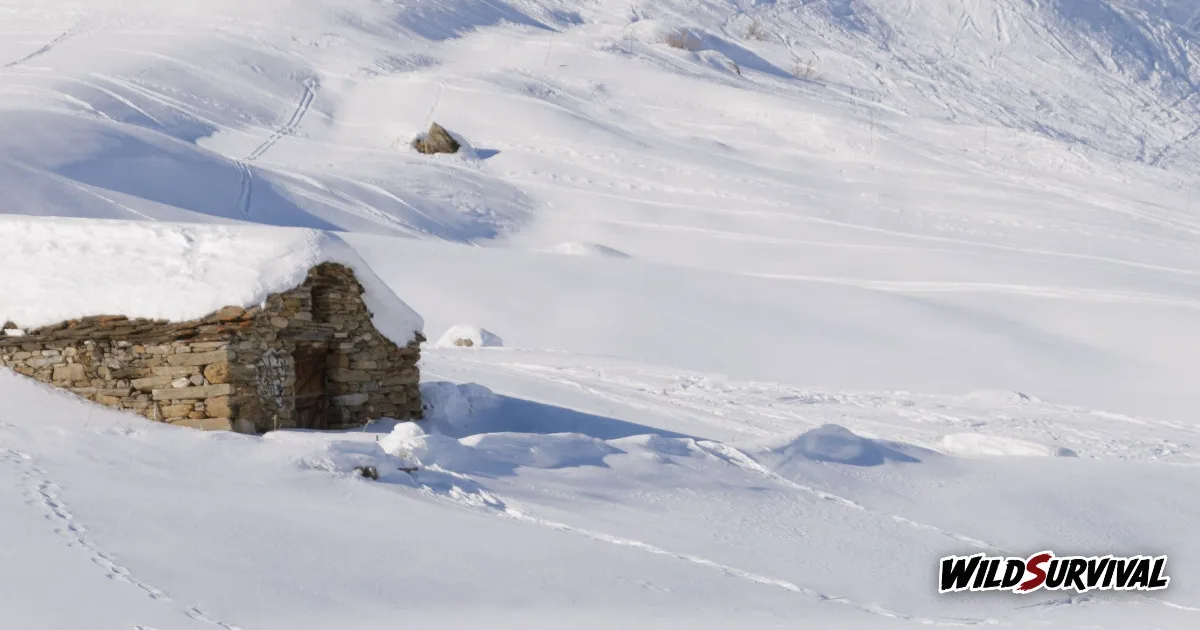
An unstaffed mountain hut is a refuge with no warden on site, usually outside the summer season, where the managing club leaves part of the building open as a shelter. You bring your own food, check the hut’s equipment online, pay for your night online, in the honesty box or by cheque to the club, and leave the place as clean as you found it. In the French Alpine Club’s network, some of these huts now require a booking even when nobody is there.
What to expect inside an unstaffed mountain hut
The French Alpine Club, known as the FFCAM, explains in its guide to the unguarded season that its huts keep one section accessible and open once the warden has gone. That section serves the public interest as a shelter and a place of refuge in an emergency.
Nobody greets you and no meals are served. The FFCAM tells you to check what equipment is available on the hut’s own website before you set off, because it varies from one building to the next. Firewood is not restocked until the next opening, though an axe is sometimes left so visitors can top up the supply.
Other owners run huts too. Refuges.info, a community site that lists free huts and shelters, asks in its code of good conduct for unstaffed huts that visitors follow local rules on stays and bookings, and let the town hall or the managing association know they are coming when that is expected. Every unstaffed mountain hut can therefore have its own rules, and they are worth reading before you climb.
Booking an unstaffed mountain hut in France
Booking has become compulsory at some huts, warden or not. The French Hiking Federation reported in an article published on 16 November 2024 that the FFCAM made the move to curb overcrowding and improve conditions. Bookings are made online on the FFCAM website, with a calendar showing how many places are left.
The article lists 17 huts, among them Vénasque in Haute-Garonne, Couvercle, Grands Mulets and Argentière in Haute-Savoie, and Col de la Vanoise in Savoie. Two of them, Presset and Pavé, were temporarily suspended at the time for building work.
For other huts, the FFCAM recommends booking and paying ahead in Isère, Savoie, Haute-Savoie, Hautes-Alpes, the Pyrenees and the Mercantour. It adds that a booking does not guarantee a bed, and that unstaffed huts can be swamped over the Christmas and New Year holidays. If your unstaffed mountain hut shows as full or nearly full, pick another objective. On a route like the Tour du Mont Blanc with its huts, check the guarded season dates before you plan your stages.
More articles on WildSurvival
- Quinzhee Snow Shelter: How to Build One That Holds
- Stevenson Trail: Walking the GR70 With or Without a Donkey
- Microspikes: Choosing Winter Traction for Icy Trails
Paying for a night in an unstaffed mountain hut
A night in an unstaffed mountain hut is not free. The FFCAM gives three ways to pay: online on the hut’s website, either when you book or after your stay; in the honesty box inside the hut, by cheque or cash; or by sending a cheque to the club that manages the building.
According to the French Hiking Federation article, the payment funds upkeep of the building and the supplies left on site. The FFCAM also points out that costs are higher in remote places. Its guide does not list prices, so look them up on the page of the hut you are heading to.
Packing for the night
With no meals served in an unstaffed mountain hut, you carry all your food and a way to cook it, depending on what the hut’s page says is there. Check too whether blankets or mattresses are provided. Refuges.info asks visitors to put mattresses and blankets away when they leave, and in a hut that has none, your own sleeping bag becomes essential.
In winter, plan the night the way you would a cold bivouac, with a warm enough sleep system and dry layers. Our guide to preparing for a night in the cold covers the insulation and sleep setup that also apply in an unheated hut.
Keep a fallback plan. The FFCAM reminds you that a booking does not guarantee a bed, and an unstaffed mountain hut can be full on the evening you arrive. Depending on the season and the local rules, a light tent or a planned bivouac spot saves you from descending in the dark. Add a charged headlamp, a spare day of food and a pen for the logbook.
Wood, fire and water
Wood is the scarcest resource. The FFCAM asks you to go easy on the logs, since nobody will restock them before the hut reopens. Refuges.info says to use only the wood you need, pick up dead wood as you walk through the forest, and bring your own if the hut provides none.
Fires belong inside, in the stove. Refuges.info advises against lighting a fire outdoors, where embers can fly, and reminds visitors to follow local regulations.
For water, the same site asks you to keep off unprotected springs and to avoid chemical products when cleaning your gear. Go to the toilet well away from the hut, because waste pollutes the water supply, a point the FFCAM makes as well.
Depending on the unstaffed mountain hut, water comes from a spring, a stream or snow you melt on your stove. Treat it before drinking to be safe, and our guide to purifying water without a filter compares boiling, tablets and UV.
House rules in an unstaffed mountain hut
The FFCAM boils communal life down to a few rules: share the space and respect other people’s sleep, never force the doors of locked rooms, do a quick clean so the place is as tidy as you would want to find it, and close the main door carefully.
Refuges.info spells the clean-up out: empty the ashes, sweep the floor and the sleeping platforms, wipe the table, remove candle wax, put mattresses and blankets away, and set the benches upside down on the table. Carry your rubbish down, and other people’s too if you can. Take perishable food and empty bottles with you, while unopened tins and sealed water bottles can stay where that is allowed.
Before you leave, close and secure the shutters, windows and doors to keep out water, snow and dust and to avoid trapping an animal inside. If you spot a hazard, wear or damage, write it in the logbook and tell the manager.
Sharing the hut
An unstaffed mountain hut remains a shelter for everyone, including people who have never heard of its rules. The French Hiking Federation article says that people who turn up without a booking because they did not know the rules should be welcomed patiently and kindly. Refuges.info likewise asks you to greet newcomers warmly and not to force your schedule on anyone else.
In the evening, agree on lights-out and on how much wood goes into the stove, especially if the woodpile is thin, and keep the noise down for anyone planning an early start. In the morning, whoever leaves last checks that the clean-up is done and the door is properly shut.
Unstaffed mountain hut essentials
| Point | What the sources say |
|---|---|
| Access | Part of the hut stays open off-season as a shelter and emergency refuge |
| Booking | Compulsory at 17 FFCAM huts, recommended in several ranges |
| Payment | Online, in the honesty box by cheque or cash, or by cheque to the club |
| Wood | No restocking before the hut reopens, so use it sparingly |
| Cleaning | Ashes emptied, floor swept, rubbish carried down |
| Leaving | Shutters, windows and doors closed and secured |