


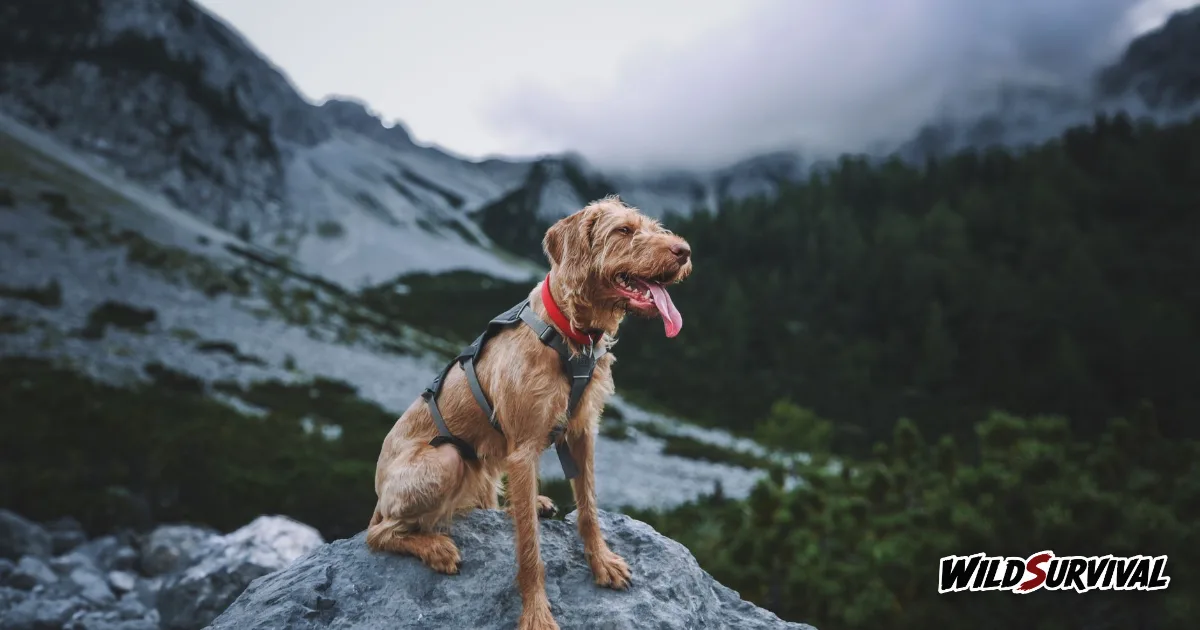
Hiking with a dog starts with knowing where dogs are allowed and when they must be on a lead. In England and Wales, the Countryside Code makes a lead a legal requirement around livestock on open access land and at the coast, and on all open access land from 1 March to 31 July. Build your dog’s fitness gradually, carry water for both of you, avoid the hottest hours, and check paws and ears for grass seeds when you get home.
Access rules for hiking with a dog in England and Wales
The Countryside Code, published by Natural England and Natural Resources Wales, asks you to keep your dog under effective control, so that it does not approach wildlife, livestock, horses or other people unless invited. In practice that means a dog on a lead or in sight at all times, one that comes back when called and stays on the path or the area where you have a right of access.
The Code also tells you to check local signs, because some areas require a lead for all or part of the year, and some ban dogs altogether apart from assistance dogs. Those rules vary locally, so a quick look at the land manager’s website before hiking with a dog somewhere new saves an awkward turnaround at the gate.
Livestock: leads, distance and when to let go
Wherever you walk, the Code says it is good practice to keep your dog on a lead around livestock. On open access land and at the coast it goes further: there you must put your dog on a lead around livestock. Between 1 March and 31 July, you must keep it on a lead on open access land even when there are no animals in sight.
The stakes are high for the dog. The Code warns that a farmer can shoot a dog that is attacking or chasing livestock, and may not have to compensate the owner. When hiking with a dog, give sheep, cattle and horses a wide berth, keep moving calmly and never let the lead go slack near young animals.
There is one exception to the lead rule, and it is about your own safety. If you feel threatened by livestock or horses, the Code says to let your dog off the lead, and not to risk getting hurt protecting it. The Code adds that releasing the dog makes it easier for you both to reach safety.
More articles on WildSurvival
- Tent Condensation: Why It Forms and How to Reduce It
- Tour du Mont Blanc: Route, Huts and Wild Camping Rules
- How to Wash and Reproof a Waterproof Jacket
Hiking with a dog abroad: French national parks
Rules can be much stricter across the Channel. The French hiking federation, the FFRandonnée, explains in its page on hiking with your dog in France that national parks such as the Mercantour, the Écrins and the Vanoise ban dogs, even on a lead. Each park sets its own rule, so read it on the park’s website before you go. Some nature reserves do the same, among them the Hauts Plateaux du Vercors reserve, and the federation warns of heavy fines.
Elsewhere, local rules may allow dogs on a lead, as in some regional nature parks, and French law forbids letting a dog stray out of sight or earshot of its owner. If you are planning a trip with an overnight stop, our guide to wild camping rules in France covers what the parks allow.
Getting your dog fit for the hills
Some dogs are built for long days more than others. The FFRandonnée considers medium-sized dogs, around 50 to 60 cm at the withers and with a long muzzle, the best suited to long walks, since a longer muzzle makes breathing easier under effort. It also advises against long hikes until a young dog has reached physical maturity.
Before hiking with a dog on a long route, train together with day walks that build up gradually in distance, time and height gain. According to the federation, that build-up also toughens the pads, which matters on scree and stony tracks. If your dog is going to carry its own pack, load it progressively, starting with it empty. A check-up with your vet before a big trip is a sensible step, as is a conversation about vaccinations and parasite treatment.
Heat, water and the signs of heatstroke
Summer heat deserves special care when hiking with a dog. The UK veterinary charity PDSA covers the risks in its guide to heatstroke in dogs. It lists flat-faced, overweight, giant-breed, thick-coated, very old and very young dogs as the most at risk, and advises walking in the early morning or evening, away from the hottest part of the day. Make sure your dog always has access to shade and water, and take water on every walk.
The early signs are panting, fast or difficult breathing and low energy. Drooling, vomiting, shaking or collapse point to a more serious case. If you suspect heatstroke, the PDSA says to move the dog into the shade, cool it gradually with water, which can come straight from a cold tap, keeping it away from the nose and mouth, offer it a drink without forcing it, and call a vet as soon as possible.
Water sources can be scarce on a ridge, so plan for your dog’s needs on top of your own. Our guide on how much water to drink when hiking helps you work out your share before you add the dog’s.
Grass seeds and ticks after every walk
The PDSA also warns about grass seeds, a hazard to watch for when hiking with a dog through meadows, whose pointed shape lets them pierce the skin. They commonly end up in the ears, behind the eyelid and between the toes. Excessive scratching or head shaking, a painful weepy eye, or constant licking of a paw are the signs to watch for.
The charity’s advice is to check your dog for grass seeds after every walk through long grass, to keep a dog that is prone to them out of long grass, and to contact your vet if you think one is stuck, since the sooner it comes out, the fewer problems it causes. Use the same check to look for ticks around the ears, neck and toes, and read our article on protecting yourself from ticks for your side of the job.
Kit for hiking with a dog
Hiking with a dog adds a few things to the pack: a strong lead, a well-fitted harness that does not rub behind the front legs, a collapsible bowl, water and food for the dog, poo bags and a small first-aid kit. On a multi-day trip, the FFRandonnée points out, your load grows with everything the dog eats and drinks.
A longer line gives the dog some freedom on wide paths while keeping it under control. Shorten it on narrow sections, along edges and whenever livestock comes into view. Test a new harness on a short local walk first, so any rubbing shows up close to home.
Clearing up after your dog
The Countryside Code asks you to always clean up your dog’s poo, because it can cause illness in people, livestock and wildlife. Bag it and put it in any public waste bin, or take it home if there is none, and never leave bags lying around, even if you mean to collect them later. Make it a habit on every path, busy or remote, when hiking with a dog.
Common mistakes when hiking with a dog
- Choosing a route through a French national park that bans dogs.
- Letting the dog run loose on open access land between 1 March and 31 July.
- Walking through a field of livestock without a lead.
- Taking a young dog on a long hike before it is physically mature.
- Setting off at midday in hot weather without water for the dog.
- Getting home without checking paws, ears and eyes.
Your checklist for hiking with a dog
| When | What to check |
|---|---|
| The day before | Dogs allowed on the route, local lead rules, season on open access land |
| Packing | Lead, harness, water and bowl, food, poo bags, first-aid kit |
| On the walk | Lead around livestock, shade and water at every stop, cooler hours in summer |
| Back home | Paws, ears, eyes and coat checked for grass seeds and ticks |
Start with short walks on paths where dogs are welcome and build up at your dog’s pace. Check the local rules before each new area, and give your dog a proper once-over every time you get back.