

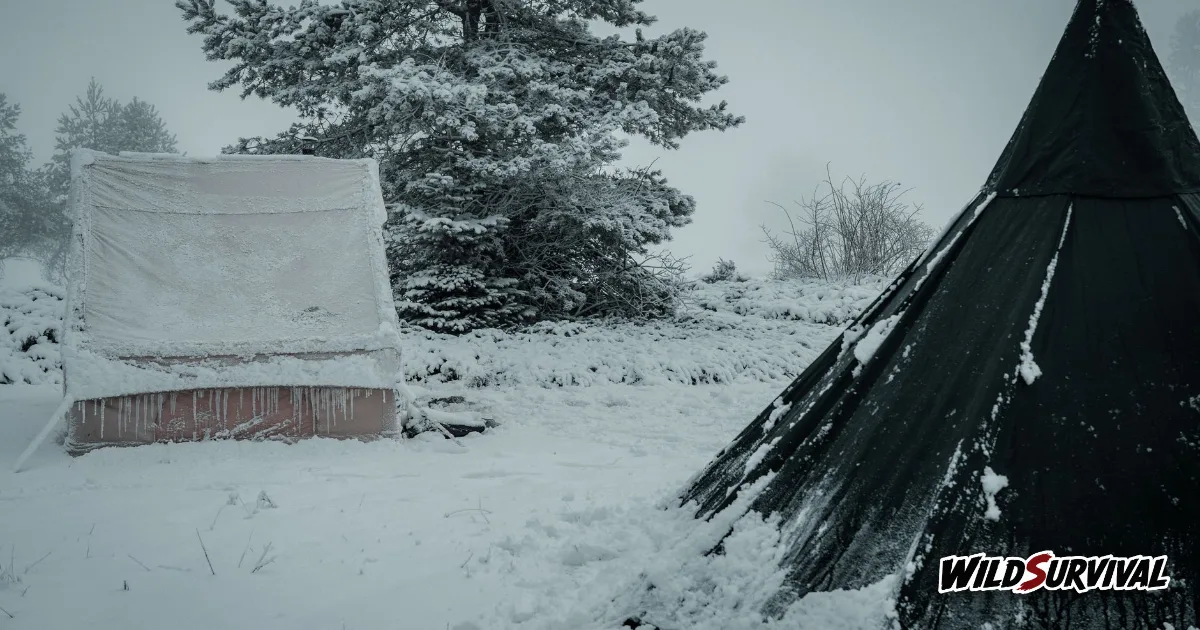
Winter camping comes down to three things: a sleeping bag chosen on its comfort rating, a sleeping mat with enough insulation to cut the cold from the ground, and a proper look at the mountain forecast and avalanche conditions before you set off. Most of your heat escapes into the ground, far more than into the air around you. Add a stove that copes with the cold, used outside or in a well-vented porch, and a night on the snow becomes comfortable.
Choosing a sleeping bag for winter camping
Sleeping bag temperatures follow the EN ISO 23537 standard. Rab explains its three values in its guide to sleeping bag temperature ratings. The comfort rating is the minimum temperature at which a person can sleep in a relaxed position and get a good night’s sleep. The limit rating is the lowest temperature at which someone curled up and fighting the cold can still sleep through the night. The extreme rating covers up to six hours in a curled position while really fighting against the cold.
For winter camping, plan around the comfort rating, never the extreme one, which describes a survival situation. Rab also points out two limits of the standard: it measures nothing below -20 °C, and tests use a mannequin on a standard foam roll mat, so your own mat changes the real result.
Our guide to the cold-weather sleeping bag compares models built for these conditions.
The sleeping mat matters most
Therm-a-Rest, the American sleeping mat maker, makes the point in its winter safety tips: heat loss happens mainly through conduction, by contact with the ground, so you need a mat with a sufficient R-value. That figure measures a material’s resistance to heat loss. Since 2019 it has been calculated under a shared standard, ASTM F3340, which Therm-a-Rest developed with other manufacturers so that figures can be compared between brands.
As a reference point, Therm-a-Rest gives its NeoAir XTherm NXT, a mat designed for the cold, an R-value of 7.3. The brand also suggests putting a closed-cell foam mat under your inflatable to boost insulation. Polar explorer Eric Larsen, one of its ambassadors, recommends that combination below freezing, and advises topping up the mat early in the evening because air shrinks as it cools.
Our guide to the insulated sleeping pad explains how to read these values.
More articles on WildSurvival
- Layering System for Hiking: How to Dress for the Hills
- Trekking Poles: How to Set the Length and Use Them Well
- Emergency Water Supply: How Much to Store at Home
Sleeping warm on a winter camping trip
Bag and mat are only part of the picture. On a winter camping night your body has to keep producing heat until morning, and it needs fuel to do it. Eric Larsen recommends eating before bed and going to the toilet just before you get into your bag, so you are not climbing out in the small hours. Therm-a-Rest favours hot drinks, since your body does not have to spend energy warming them up, and a flask filled at dinner also covers breakfast.
Keep one dry set of clothes for sleeping only, socks included, and put it on once you are settled. Therm-a-Rest warns that moisture in wet clothing can freeze, turning a damp layer into a cold one against your skin. Change as soon as you reach camp, before the sweat from the climb starts to chill you.
Get organised before dark, too. Winter days are short, and pitching a tent, inflating a mat or finding a lighter by headtorch in thick gloves takes far longer than in summer. Stash what you will need overnight in the tent pockets: headtorch, water bottle and warm layer.
Stoves and gas canisters in the cold
On a winter camping trip, cold weakens gas canisters. MSR explains that propane boils at -42 °C, which makes it a great cold-weather fuel, while isobutane only starts boiling at -12 °C. Its IsoPro canister blends the two. A stove with a pressure regulator keeps running better as canister pressure drops in the cold, and a stove that takes an inverted canister, such as MSR’s WindPro II, holds more power in those conditions. Therm-a-Rest adds that liquid-fuel stoves stay more reliable in serious cold.
Keep the canister warm overnight when winter camping, in your sleeping bag or against your body, and warm it in your hands before lighting. Our comparison of camping stoves shows which models handle the cold best.
Carbon monoxide in the tent
When winter camping in hard cold, it is tempting to cook with the tent zipped shut. The NHS lists camping stoves and barbecues used indoors or inside a tent among the causes of carbon monoxide poisoning. Its list of symptoms includes headache, dizziness, feeling or being sick, weakness, tiredness and confusion, chest and muscle pain, and shortness of breath. The advice is to turn the appliance off, go outside and get medical advice as soon as possible.
Cook outside whenever you can, or in a wide-open porch, never in the inner tent. Our article on carbon monoxide in enclosed shelters covers the risk in detail.
Mountain forecasts, avalanches and hypothermia
In Scotland, Mountaineering Scotland points walkers to three sources. The Scottish Avalanche Information Service publishes daily avalanche, snow and climbing forecasts for six areas during a season that generally runs from mid-December to early April. The Mountain Weather Information Service covers ten mountain areas of the UK with three-day forecasts produced by 4:30pm daily, and the Met Office issues mountain forecasts twice a day. The European avalanche danger scale notes that at level 3, considerable, triggering is possible even from low additional loads, particularly on the indicated steep slopes. Without avalanche training, plan your winter camping pitch well away from steep slopes and gullies.
Heading to the French Alps or Pyrenees for winter camping? The French avalanche bulletin, the BERA, applies outside marked and open pistes, rates the danger from 1, low, to 5, very high, and often splits it by altitude, for example limited danger above 2,300 m and low danger below. Check the bulletin for the specific massif the evening before you go, and again in the morning.
The other risk is hypothermia. The NHS defines it as a dangerous drop in body temperature below 35 °C, with signs including shivering, pale, cold and dry skin, slurred speech, slow breathing, tiredness or confusion. Therm-a-Rest advises never sleeping in wet clothes, since the moisture can freeze, and favouring hot drinks, which your body does not have to spend energy warming up.
If anyone in your group shows those signs during winter camping, get them into shelter, into dry clothes and into a sleeping bag on an insulated mat.
Planning your first winter camping trip
| Stage | What to do |
|---|---|
| The day before | Avalanche forecast, mountain weather, a pitch well away from steep slopes |
| Packing | Sleeping bag chosen on its comfort rating, inflatable and foam mats stacked |
| Evening | Dry clothes for the night, a hot drink, a proper meal, mat topped up |
| Overnight | Gas canister and spare socks inside the sleeping bag |
For your first night of winter camping, pick a short trip less than an hour from a fallback point, on a night forecast to be calm. If you are heading to the Alps or Pyrenees, our guide to wild camping rules in France explains where pitching a tent is allowed.