

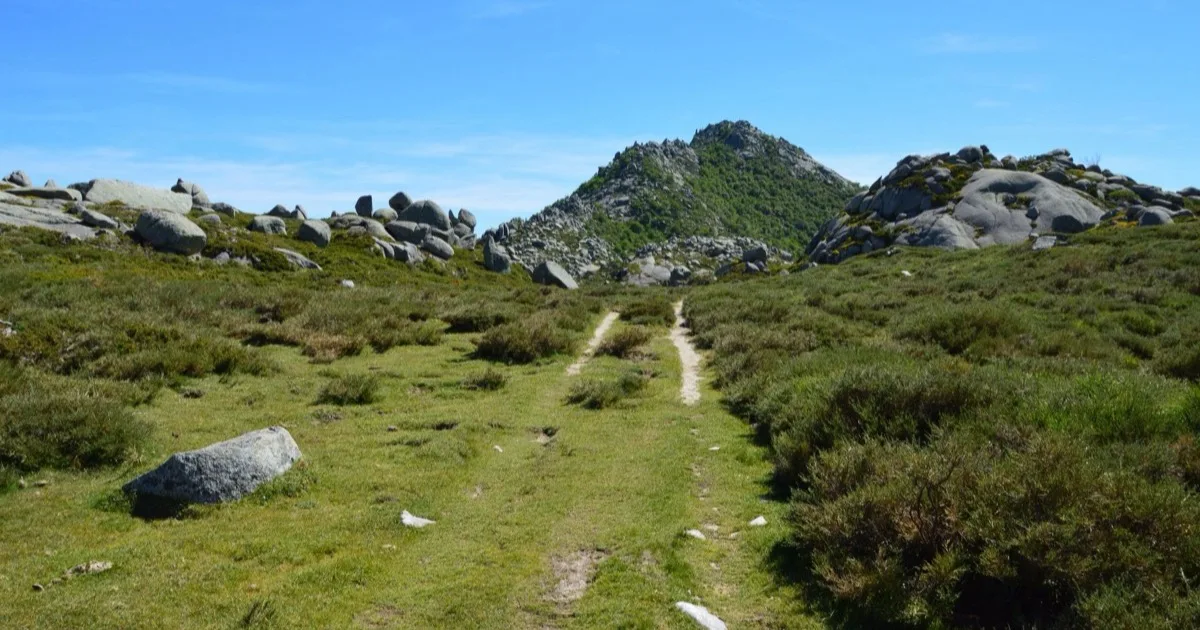
Hiking the GR20 starts with booking: the Corsica Regional Nature Park, which runs the mountain huts, requires every night to be reserved in advance on its online platform, bivouac pitches included. The trail runs north to south from Calenzana to Conca in 16 stages that the park puts at about 15 days, with Vizzavona marking the switch from the northern half to the southern half. Wild camping is banned along the route, and so are fires from 15 June to 30 September.
The GR20 route in numbers
The Corsica Regional Nature Park’s page on the GR20 (in French) splits the route into 16 stages, from Calenzana in the Balagne region to Conca, in the hills behind Porto-Vecchio. The huts follow one another in this order: Ortu di u Piobbu, Carrozzu, Ascu Stagnu, Tighjettu, Ciottulu di i Mori, Manganu, Petra Piana, L’Onda, Vizzavona, E Capanelle, Prati, Usciolu, Cuscionu, Asinao and Paliri, before the finish at Conca. The park describes Vizzavona as the end of the northern section.
The distance depends on who you ask. The French hiking federation (FFRandonnée) gives about 200 km, the specialist site Toporando counts 177 km, and the park itself publishes no total. No official source gives a cumulative climb either: Lonely Planet’s French guide puts it at about 10,000 m of ascent, Toporando at 11,800 m. What the FFRandonnée does spell out is stages of 4 to 8 hours on a path that often climbs to around 2,000 metres.
With days like that, serious physical training belongs on the preparation list alongside the bookings. Long walks with real climbs and a loaded pack, spread over the months before you go, help you arrive ready for the first stage out of Calenzana.
North, south or the whole route
The park’s list of stages makes it easy to split the trail in two. From Calenzana to Vizzavona, the northern half covers nine stages. From Vizzavona to Conca, the southern half covers seven. Vizzavona has a railway station, so you can arrive or leave by train in the middle of the route.
Hiking the GR20 in one go therefore means setting aside about fifteen days by the park’s count, plus travel to Calenzana and back from Conca. If you only have a week, one half of the trail fits that window, and the other half can wait for a second trip. The official direction of travel is north to south, and that is how both the park and the FFRandonnée describe the stages.
More articles on WildSurvival
- How to Pitch a Tarp: 5 Setups for Wind and Rain
- Foraging Wild Mushrooms, the Basic Safety Rules
- Field-Repairing Your Hiking Gear, the Kit Worth Carrying
Booking huts and pitches for hiking the GR20
The park is unambiguous: nights in its huts must be booked, whether you sleep on a bunk platform or in a bivouac pitch. Bookings are online only, through the park’s hut reservation platform, with payment by card.
For the 2026 season, the huts open from 16 May to 4 October, and the FFRandonnée reports in its notice on the 2026 booking opening (in French) that bookings opened on 20 January. The federation also notes that the Ortu di u Piobbu, Carrozzu and Usciolu huts fill up quickly, and that early June and early September are the busiest periods. If you are aiming for those dates, book as soon as the next season opens.
The park’s 2026 prices are 20 euros a night on a bunk platform, 12 euros for a bivouac pitch, 27 euros to rent a one-person tent and 39 euros for a two-person tent. According to the FFRandonnée, you can still change a booking up to two days ahead, subject to availability. Prices can change from one season to the next, so check them when you book.
Which option suits you comes down to what you are willing to carry. A bunk platform saves you from carrying a tent. A tent rented on site takes that weight off your back, and the park offers one-person and two-person tents. Pitching your own tent costs the least, but you carry the shelter for all sixteen stages. The FFRandonnée also reports price rises for 2026, 3 euros on a bed and 5 euros on a tent, worth factoring in if you compare seasons.
Rules on the trail
The park bans wild camping on the GR20 in line with local municipal orders. Bivouacking is only allowed near the huts or on designated areas, and it has to be booked. Smoking and lighting fires are also banned from 15 June to 30 September, according to the park’s official page.
The route’s most famous section no longer exists. The Cirque de la Solitude was the scene of a deadly rockfall on 10 June 2015. Since then, the park explains, the stage has had its waymarks and fixed equipment removed, and the site is closed to the public by order of the prefecture. A variant replaces the stage between Ascu Stagnu and Tighjettu, with close to 1,200 m of ascent along the ridges and two or three sections fitted with chains and handrails for wet weather.
Further south, the stage between Asinao and Paliri also crosses rock slabs fitted with handrails. As with the Solitude variant, it is wise to stay off these sections when a storm is building.
Food and resupply along the way
Every hut on the GR20 offers a catering service (hot evening meal, breakfast and a packed lunch) and a small shop, the park says. Its 2026 prices come to about 10 euros for breakfast, 10 euros for a packed lunch and 20 euros for dinner, or roughly 50 euros a day if you buy everything on site.
Those figures allow a quick sum, worth redoing with the prices for the year you go. At 2026 rates, a night on a bunk platform at 20 euros plus all three meals at the hut comes to about 70 euros a day. Over fifteen days, the all-inclusive option therefore approaches 1,000 euros per person before travel. Sleeping in your own tent on a 12-euro pitch and carrying some of your food brings the total down clearly, at the cost of a heavier pack.
According to Lonely Planet, only three inhabited places sit on the route: Haut-Asco, Vizzavona and Bavella. The guide advises carrying cash, since there are no cash machines and cards are not widely accepted. Toporando adds Castel di Vergio, with a hotel and a shop by the road, and describes Vizzavona as having a railway station, shops, restaurants, a hut and a campsite. The train there runs to Ajaccio, a handy option if you need to leave the trail halfway.
Between carrying everything and eating at every hut, plenty of combinations work. If you plan to be self-sufficient for part of the route, our guide to food for a multi-day hike helps you work out rations and how much weight to carry between two shops.
Weather, water and safety in the Corsican mountains
The park gives three safety rules: never head into the mountains alone, watch for fast weather changes since violent storms can strike even in summer, and call 112 in an emergency. It points hikers to Météo-France for forecasts. Our guide to protecting yourself from lightning in the mountains covers what to do when a storm reaches a ridge.
Timing matters for water too. The FFRandonnée advises against starting the GR20 outside the hut season, because of snow and a lack of water. Toporando adds that many springs begin to dry up in September, and that snow can linger until around mid-June. The guides disagree on storm season: Lonely Planet flags afternoon storms from mid-August into September, while Toporando says storms are more frequent in July and August. Whatever the month, start early so you are over the ridges before the afternoon. Carry enough water capacity for the longest stages and a way to treat water from springs.
Sixteen stages over this kind of rocky ground also put your feet through a lot. Wear boots or shoes you have already broken in, and prepare your feet using our guide to preventing hiking blisters before you leave rather than at the first hut.
Your checklist for hiking the GR20
To plan for hiking the GR20 in the right order, start by choosing your dates within the hut season, then book every night on the park’s platform as soon as bookings open, beginning with the busiest huts. Next, decide how you will sleep (bunk platform, rented tent or your own tent on a bivouac pitch) and how much of your food you will carry.
In the months before you go, train on hills with a loaded pack. Just before departure, check the park’s official page for that year’s rules, prices and the state of the variant that replaces the Solitude, pack some cash, and keep 112 in mind.