


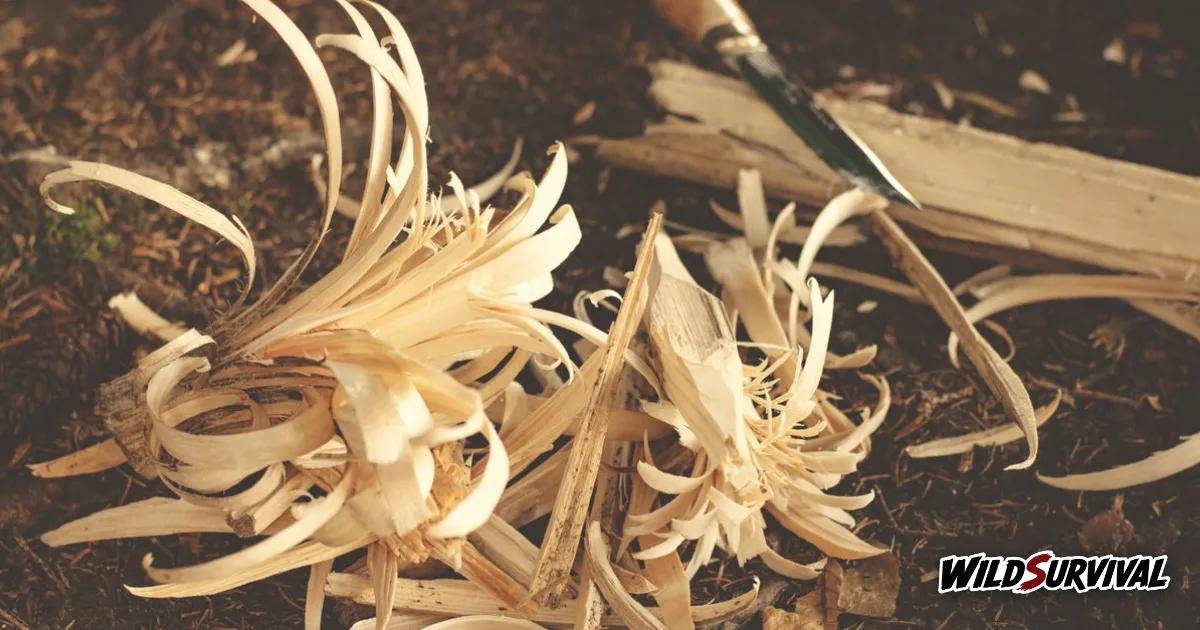
The Mora Companion is a Swedish fixed-blade knife with a 104 mm Scandi-ground blade, listed at €18.99 on the maker’s European store and around $16 in a GearJunkie review, and it handles most bushcraft chores: shavings, fine carving, camp cooking and light batoning. The stainless version, in 12C27 steel 2.5 mm thick, suits most hikers; the carbon version is thinner and easier to sharpen but needs care. For harder work, the Companion Heavy Duty steps up to 3.2 mm.
Mora Companion specs at a glance
Morakniv, based in Mora, Sweden, publishes detailed spec sheets for every variant. The figures below come from the official page for the stainless Companion and from the pages for the carbon and Heavy Duty models:
| Spec | Companion (S) stainless | Companion (C) carbon | Companion Heavy Duty (S) |
|---|---|---|---|
| Steel | Swedish 12C27 (Alleima), 56.5 HRC | German C100S, 58.5 HRC | Swedish 12C27, 56.5 HRC |
| Blade length | 104 mm (4.1 in) | 104 mm (4.1 in) | 104 mm (4.1 in) |
| Blade thickness | 2.5 mm | 2.0 mm | 3.2 mm |
| Knife length | 219 mm (8.6 in) | 219 mm (8.6 in) | 224 mm (8.8 in) |
| Weight | 118.4 g (4.18 oz) | 118.4 g (4.18 oz) | 135.3 g (4.77 oz) |
| Grind | Scandi, 22 to 24° total | Scandi, 22 to 24° total | Scandi, 26 to 28° total |
| Listed price | €18.99 | €17.99 | 289 SEK |
All three share the same blade length, the same 37 to 39° edge angle and the same molded polymer handle with a TPE rubber grip and a finger guard. What separates them is the steel and the thickness, in other words the balance between slicing finesse and toughness. Prices are those shown on Morakniv’s online stores and change with country and color.
A modern puukko built for Swedish forests
Specialist retailer Knivesandtools, in its spotlight on the Mora Companion, explains that the design draws on the Finnish puukko, the traditional Nordic belt knife, and that it was first meant for the forests of Sweden. You can see it in the silhouette: a straight blade with a centered point, a thick handle and a discreet guard, stripped down to essentials.
The Companion line has grown around that base model. Knivesandtools lists the Companion Spark, which carries a firesteel in the handle. It comes in stainless only, with a 2.5 mm blade, and its spine is ground to 90° so you can scrape the firesteel without dulling the edge. The same family also includes rescue, fishing and electrician’s knives, a sign that the base design is versatile enough for very different trades.
More articles on WildSurvival
- Paracord 550 Uses: The Mil-Spec Cord in Camp and Its Limits
- Treating Burns Outdoors: Cool, Cover and Call for Help
- Avalanche Risk Snowshoeing: Bulletins, Kit and Safe Routes
Stainless or carbon: which Mora Companion to pick
The stainless version uses 12C27 steel made in Sweden by Alleima, hardened to 56.5 HRC. It shrugs off damp weather, food prep and the odd week forgotten at the bottom of a pack without rusting at the first shower. It is the best-known Mora Companion, offered in six handle colors on the maker’s page: hi-vis orange, black, desert, Dala red, burnt orange and olive green. The orange helps when you set the knife down in leaf litter. The spec sheet also notes that the steel is annealed and hardened, with no cryo treatment.
The carbon version moves to German C100S steel hardened to 58.5 HRC, with a thinner 2.0 mm blade. Morakniv itself says this carbon steel is easy to resharpen but requires maintenance. In practice, you wipe and oil it after use to keep rust away, and in return you get an edge that comes back quickly on a stone. If you already sharpen your own tools, our guide to sharpening a bushcraft knife walks through the method for a Scandi grind.
For a first hiking knife or a spare blade in the pack, stainless asks less of you. For someone who carves a lot and looks after their kit, carbon keeps a real appeal.
The Scandi grind in practice
The Mora Companion carries a Scandi grind: one wide bevel on each side that runs down to the edge without a pronounced micro-bevel. Morakniv gives a total grind angle of 22 to 24° on the standard versions and a 37 to 39° edge angle. That flat bevel sits flush on a stone, which makes sharpening easy to read even for a beginner.
In the field, this profile favors controlled cuts in wood: thin curls for a feather stick, notches, carving a spoon. Reviewer Matt Jancer, in his Morakniv Companion review for GearJunkie, finds it nimble enough for jobs that need finesse, such as feathering sticks for tinder. He also found the blade extremely sharp right out of the package.
The rest of his use will sound familiar to many hikers: slicing cheese and sausage, spreading peanut butter, cutting gauze or moleskin, and once turning a plastic milk jug into a water scoop on a wet trip. The Mora Companion is as comfortable with these everyday chores as with woodwork. If you want to try carving, our guide to spoon carving for beginners shows the basic cuts a knife like this makes possible.
Batoning and the partial tang: documented limits
The Mora Companion has a partial tang. Morakniv calls it its standard tang, Matt Jancer describes it as partial, and Knivesandtools says it runs through roughly three-quarters of the handle. The retailer rates it less strong than a full tang but strong enough for any bushcraft task, and notes that it helps keep the price down. Jancer argues that the obsession with full tangs is overblown for most uses and says he would be surprised if somebody managed to break a Companion. He found it strong enough for light batoning of thin branches, the kind he split for a wood-burning stove.
The key word is “light”. At 2.5 mm, the standard blade stays in small-branch territory according to that review. For bigger splitting, Morakniv offers the Companion Heavy Duty: its 3.2 mm blade and wider 26 to 28° grind give a sturdier edge, at the cost of slightly less refined slicing. Morakniv presents it as a sturdy wilderness knife for carving, cutting branches and building shelters. Its spec sheet rates its flex as stiff, for a weight of 135.3 g, about 17 g more than the standard model. For technique, our piece on batoning with a knife explains how to split wood without hurting the blade.
Jancer flags two more weak points. The 2.5 mm blade makes the knife a little less nimble for fine slicing, and at 104 mm the blade feels a bit long to him for a pure backpacking knife, where most tasks fit a shorter blade. He gives the Mora Companion an overall score of 8.2 out of 10, with 9.2 for value and 7.5 for durability. Style and performance both get 7.7. He lists the knife at 8.6 inches overall and 4.1 ounces with its sheath, which is close to Morakniv’s own figures and light enough to forget on a belt.
Those scores line up with the price. Jancer sums up the value by saying that at $16 you could afford it with money from a kid’s paper route, and Morakniv’s European store lists the stainless and carbon versions at €18.99 and €17.99. At that level, keeping a spare in the car kit or lending one to a beginner on a first bushcraft weekend costs little, which suits a knife meant to be used hard.
Handle and sheath of the Mora Companion
The handle is molded polymer with a TPE rubber grip zone and a finger guard. Jancer says it never slipped, even with a soaked hand, and rates rubber above wood for function. The guard reduces the risk of your hand sliding onto the blade during a push cut.
The sheath is polypropylene with a belt clip. Morakniv describes it as ambidextrous, and the GearJunkie reviewer notes that the knife locks into it securely. Knivesandtools adds that it attaches easily to a belt or a trouser pocket, and that you can draw the knife one-handed by pushing on the thumb rest. It remains a simple plastic sheath, with the clip as its only attachment on the maker’s page, so plan on a cord or an aftermarket sheath if you want to carry it around your neck or on a pack strap.
Who the Mora Companion suits
| First bushcraft knife | Mora Companion stainless, 2.5 mm, low maintenance |
| Fine carving and home sharpening | Companion carbon, 2.0 mm, wiped and oiled after use |
| Regular batoning and shelter work | Companion Heavy Duty, 3.2 mm, wider grind |
| Light backpacking, small chores | A shorter blade may do, per the GearJunkie review |
The Mora Companion is a simple tool whose limits are known and published: a partial tang, a basic sheath and a standard blade that prefers light batoning. Against that, it brings a respected Swedish steel, a grind that is easy to maintain and a price that lets you keep one in every pack. Pick the version that matches your use, then learn to sharpen it, which is what keeps any Mora Companion going for years.