

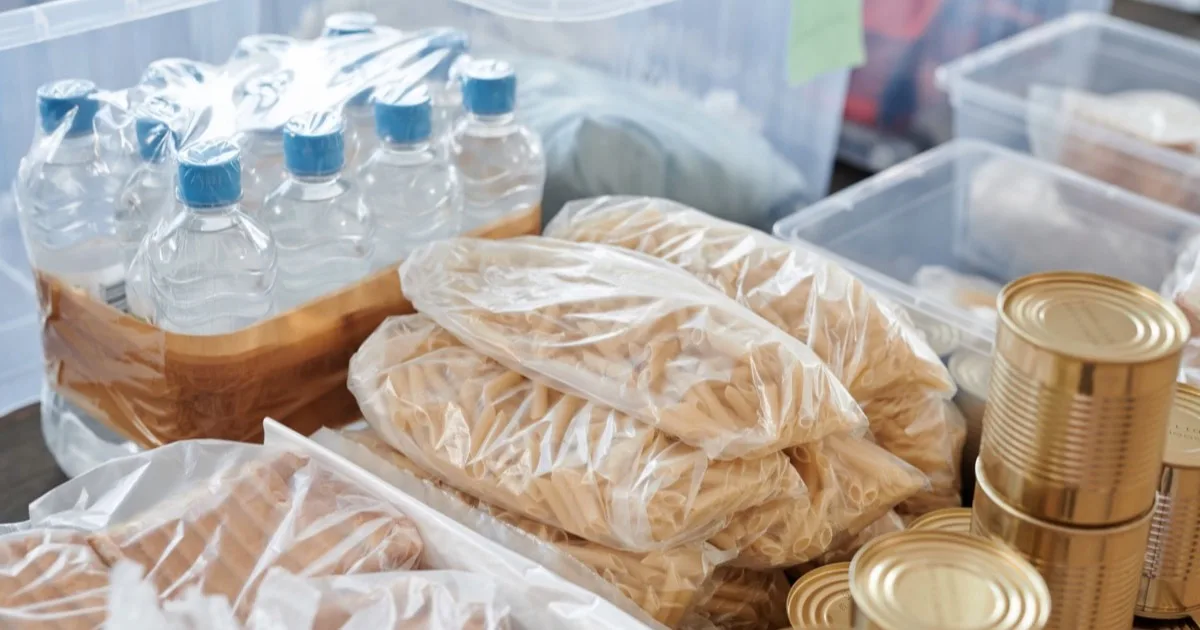
An emergency water supply is worked out per person, per day, for the number of days you want to cover. The UK government’s Prepare campaign quotes the World Health Organization’s survival minimum of 2.5 to 3 litres of drinking water per person per day, and says 10 litres per person per day will make you more comfortable by covering cooking and washing. The US Centers for Disease Control and Prevention ask for at least one gallon, about 3.8 litres, per person per day for three days, and ideally enough for two weeks. Pets need water on top of that.
What official guidance says about an emergency water supply
Official figures vary from country to country, but they all start from the same idea: getting through the first days of a crisis without tap water. The UK government’s guide to getting prepared for emergencies sets the WHO minimum of 2.5 to 3 litres per person per day for survival, raises it to 10 litres per day for comfort, and reminds households that extra water might be needed for pets.
The CDC guide to creating and storing an emergency water supply sets the bar at one gallon per person per day for at least three days, with two weeks as the ideal. Across the Channel, the French government’s 72-hour emergency kit lists 6 litres of bottled drinking water per person, and the canton of Geneva in Switzerland recommends 9 litres per person for three days.
| Source | Recommended amount |
|---|---|
| WHO, quoted by the UK government | 2.5 to 3 litres per person per day to survive, 10 litres for comfort |
| CDC (United States) | 1 gallon per person per day for 3 days, ideally 2 weeks |
| French government (72-hour kit) | 6 litres per person, bottled |
| Canton of Geneva | 9 litres per person for 3 days |
Working out your household’s water supply
The sum fits on one line: people, times litres per day, times days. Take an example and swap in your own numbers: a household of four that wants to cover three days.
At the WHO survival minimum of 3 litres a day, that household needs 36 litres. At the CDC’s gallon a day, it needs about 45 litres. At the 10 litres a day the UK government links to comfort, with cooking and basic washing included, it needs 120 litres for the same three days.
That spread is the real decision you have to make: water for drinking only, or enough to keep cooking and washing. Thirty-odd litres fits in a kitchen cupboard. A hundred and twenty litres needs proper space in a garage, a utility room or under the stairs.
The CDC adds that some people need more than the baseline, including pregnant women, people who are ill and everyone in hot weather. Add your pets’ share to the total rather than taking it out of the humans’ allowance.
More articles on WildSurvival
- How to Use a Compass With a Map in Three Steps
- Hiking the GR20 in Corsica: Stages, Booking and Supplies
- Wild Camping in France: Bivouac Rules, Parks and Fires
Storing your emergency water supply in bottles
Shop-bought bottled water is the simplest option. Ready.gov, the emergency preparedness site of the US federal agency FEMA, advises buying commercially bottled water and keeping it sealed in its original container in a cool, dark place.
If you would rather build your emergency water supply by filling your own containers from the tap, the CDC asks for food-grade containers that are clean and close tightly. It also explains how to sanitise them with a weak bleach solution before use and rinse them out.
Water stored this way does not keep for ever. Both the CDC and Ready.gov say to replace it every six months. Write the fill date on each container and put the next change in your diary.
For bottled water, keep an eye on the date on the pack and rotate your stock: drink the oldest bottles day to day and replace them with new ones. That way the emergency water supply stays fresh and nothing goes to waste.
Finding room for water in a small home
Storage is the hard part in a flat. Ready.gov’s cool, dark place rules out windowsills, the top of the fridge and the cupboard next to the boiler. That leaves low cupboards, the space under the bed, the back of a wardrobe, or a cellar if the building has one.
Rather than keeping everything in one place, spread the packs across two or three spots. Shelves take the weight better, and part of the emergency water supply stays within reach even if one room becomes hard to get into. Keep the water away from cleaning products, solvents and fuel, so that a leak from another container cannot spoil it.
If space is really tight, start with a few days at the survival minimum and build up as you shop. One extra pack a week turns into a comfortable emergency water supply within a few months, with no big spend in one go.
Making water safe if the emergency water supply runs low
If the emergency lasts longer than planned, you may need to treat water you are not sure about. Ready.gov gives a method using unscented household bleach: 1/8 of a teaspoon per gallon of water, about 3.8 litres, stirred in and left to stand for 30 minutes before drinking.
That dose is based on US bleach, which the CDC puts at between 5 and 9 % sodium hypochlorite. Strength varies from one product to another, so read the label on your own bottle before relying on that figure, and if in doubt, boil. Our guide to purifying water without a filter compares boiling, tablets and UV.
Fitting water into the rest of your emergency plan
Water is only one line of an emergency kit, even if it is the heaviest. An emergency water supply buried at the back of a cluttered garage is little help on the day you need to leave in a hurry, so keep part of it where you can grab it.
The French government’s 72-hour kit document makes two points that carry over well to any country: keep the bag somewhere easy to reach, and check its contents once a year. A yearly check is also a good moment to swap any water you bottled yourself, look for split packs or cloudy containers, and adjust the total if someone has joined or left the household.
If a planned water cut is announced by your supplier, you also get a short window to top up. Filling clean, food-grade containers from the tap before the cut adds to your emergency water supply and keeps the stored bottles for a cut that arrives without warning.
It helps to split your emergency water supply in two. The first part, a few litres per person, goes with the grab bag. The second, larger part stays at home for the case where you shelter in place without running water. Our 72-hour survival kit guide covers the rest of the bag, and our piece on a prolonged power outage looks at the other supplies to keep when the electricity goes.
Your starting point is the official minimum of 2.5 to 3 litres per person per day. From there, scale it to your household, your pets and the comfort you want, store it sealed or in food-grade containers somewhere cool and dark, and replace anything you bottled yourself every six months.