

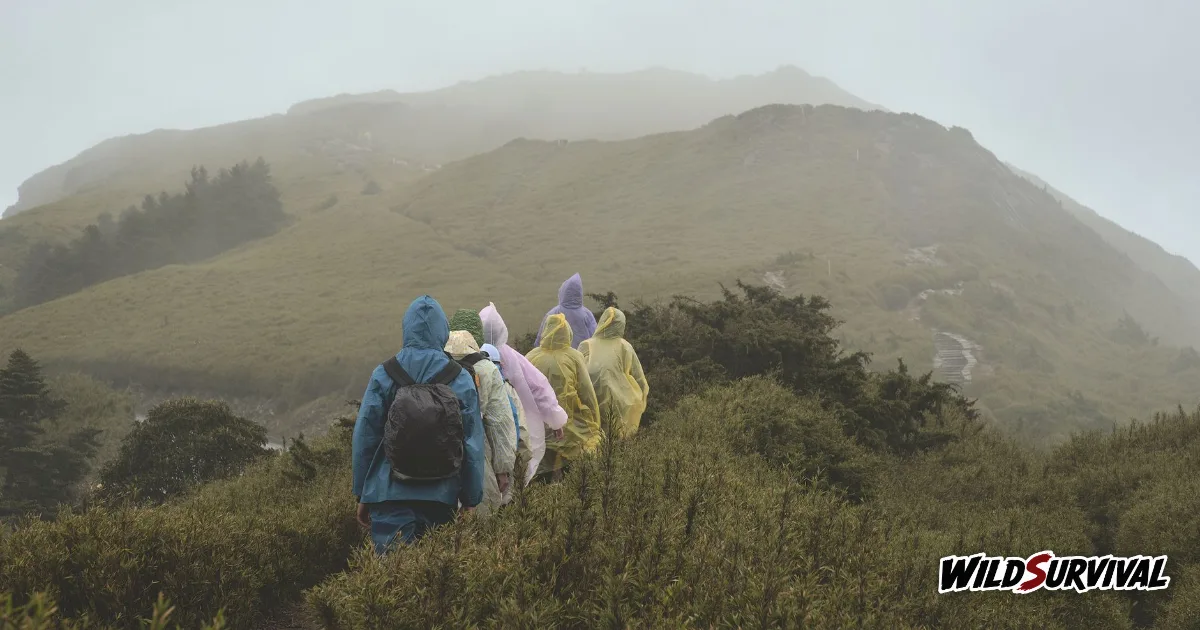
Hiking in the rain starts before you leave home: check the weather warnings, plan your route around the streams you will have to cross, then wear thin layers under a well-maintained waterproof and keep the contents of your pack dry. Out on the hill, the real threats are cold, wet conditions and rivers in spate, far more than the rain itself. A grey, drizzly day can be a good one, as long as you are ready to call it off when the warnings turn amber.
Checking the forecast before hiking in the rain
The first decision happens at home. The Met Office’s guide to its weather warnings explains that each warning is coloured yellow, amber or red according to both the likely impact and the likelihood of that impact. Amber means an increased likelihood of severe weather with a potential risk to life and property. Red means dangerous weather is expected and you should take action now.
For the hills, the Met Office issues a dedicated forecast for hill walkers and climbers twice a day, covering ten upland areas of the UK, and the Mountain Weather Information Service produces forecasts for ten mountain areas, published by 4:30pm each day. The Met Office also reminds walkers that rain often falls heavier on the hills and mountains than in the valleys, so steady rain at the car park can mean a downpour on the ridge.
Finally, adapt the route itself. For hiking in the rain, favour waymarked paths over slabby scrambles and exposed ridges, keep a shorter escape option in mind, and leave your route and expected return time with someone at home.
What to wear for hiking in the rain
One thick jacket is the worst way to handle rain: you sweat on the climb and shiver at every stop. The British Mountaineering Council recommends a few relatively thin layers over a single thick one, because the air trapped between them insulates and you can fine-tune your temperature by adding or removing a layer. Our guide to the layering system for hiking explains how the three layers work together.
Leave cotton at home. The BMC warns that cotton T-shirts and jeans are particularly cold when wet. Choose wool, fleece or synthetic sportswear, and keep a dry warm layer at the bottom of your pack for breaks and for the end of the day.
A waterproof jacket loses performance as its water-repellent finish wears off. Gore-Tex explains that once water stops beading on the surface, the durable water repellent treatment, or DWR, is no longer working properly and needs reactivating by washing and heat, or reapplying with a spray-on or wash-in product. The brand recommends a 40 °C wash with a small amount of liquid detergent, no fabric softener or powder, and a further 20 minutes in the tumble dryer on a warm gentle cycle once the garment is dry.
Hiking in the rain also means getting wet from the inside if you overheat, so open the front zip and the pit zips on the climbs before sweat builds up.
More articles on WildSurvival
- Layering System for Hiking: How to Dress for the Hills
- Trekking Poles: How to Set the Length and Use Them Well
- Emergency Water Supply: How Much to Store at Home
Boots and rucksacks in wet weather
Footwear comes down to a trade-off. Boot maker Oboz puts it simply: go waterproof if you want protection, warmth and dry socks in messy conditions, and go non-waterproof if you want breathability, lighter weight and quicker drying, since non-waterproof shoes often dry faster when your feet are getting wet anyway. For cold autumn rain a membrane makes sense, while a breathable shoe that dries as you walk can be more comfortable on a warm, wet summer route with several fords.
Your rucksack needs two kinds of protection. A rain cover, such as Deuter’s Raincover II with its PU coating and taped seams, keeps the outside of the pack dry. A dry bag or a heavy-duty bin liner inside protects whatever must never get wet: your spare warm layer, sleeping bag, phone and first aid kit.
The main risks of hiking in the rain
Cold comes first. The BMC notes that temperatures can drop by 1 to 2 °C for every 100 metres of height gained, and that even moderate winds drastically lower the temperature you feel, raising the risk of hypothermia. It offers a handy check: if someone in your party starts to stumble, mumble or fumble, they may be showing the first signs of hypothermia. Our guide to recognising and treating hypothermia covers what to do next.
Rivers come second. Mountaineering Scotland’s advice on river crossings warns that fast-flowing water can be alarmingly powerful, with cold water and an uneven, slippery bed. When heavy rain is forecast, it suggests planning your route to cross glens high up near the watershed, looking for the nearest bridge, and sitting it out for a few hours until levels drop, provided you have enough warm kit and shelter to do so.
Slips come third. Of the 3,842 Mountain Rescue callouts across England and Wales in 2024, 23% followed a slip or a trip, according to figures reported by MBR magazine. Those figures do not say how many involved wet ground, but roots, slabs and wooden boardwalks all get treacherous in the rain, so shorten your stride and place your feet flat.
Crossing a stream swollen by rain
If you have to cross, Mountaineering Scotland gives a clear method. On your own, use a walking pole and face upstream: the pole forms a tripod with your two legs, and you move only one leg of the tripod at a time. In a group, everyone faces upstream with the strongest person at the front, and each person holds on to the rucksack of the one ahead. Zip up every garment and make sure nothing is loose enough to be caught by the current.
Our article on how to cross a stream safely goes further into footing and pole use. When in doubt, turn back or wait.
When hiking in the rain turns to thunder
Steady rain and a thunderstorm call for different responses. The Met Office’s warning system treats severe weather by impact and likelihood, and an amber warning means an increased likelihood of impacts with a potential risk to life and property. If thunderstorms are forecast over your area, postpone or switch to a low-level woodland route away from ridges and summits, with villages or shelter along the way.
If a storm catches you out, get off exposed ground, move away from isolated trees and metal fences, and put your walking poles down at a distance. Our guide to protecting yourself from lightning in the mountains explains the position to adopt.
Managing breaks when hiking in the rain
The rest stop is the trickiest part of hiking in the rain. While you are moving, your body makes enough heat to cope with the wet. As soon as you stop, sweat and rain start to chill you within minutes, especially in wind. The BMC’s figure of a 1 to 2 °C drop for every 100 metres also means a summit break happens in noticeably colder air than the car park.
Keep breaks short and frequent, behind a boulder, a stand of trees or a bothy, and pull your warm layer on before you sit down, under your waterproof. Eat and drink regularly even when you do not feel hungry or thirsty: on grey days it is easy to forget to drink while the effort carries on. Keep snacks in an outside pocket so you are not opening the pack in a downpour.
At the end of the day, get out of wet clothing as soon as you are under cover, change into the dry set kept at the bottom of your pack, and hang up whatever you can to dry. If your jacket has stopped beading, give it the wash and tumble-dry treatment Gore-Tex recommends before your next trip.
Planning a day of hiking in the rain
| When | What to do |
|---|---|
| The day before | Check Met Office warnings and the mountain forecast, avoid uncertain fords, plan an escape route |
| At the start | Thin layers, a waterproof with working DWR, a dry bag inside the pack |
| On the move | Vent before you sweat, eat and drink regularly, short steps on wet ground |
| At breaks | Put the warm layer on straight away, get out of the wind |
The Met Office sums up the right mindset in two pieces of advice: be flexible with your plans, and be prepared to turn back and enjoy the route another day. Done well, hiking in the rain gives you empty paths and woods full of scent, and when evening comes our guide to making fire in the rain takes over.