


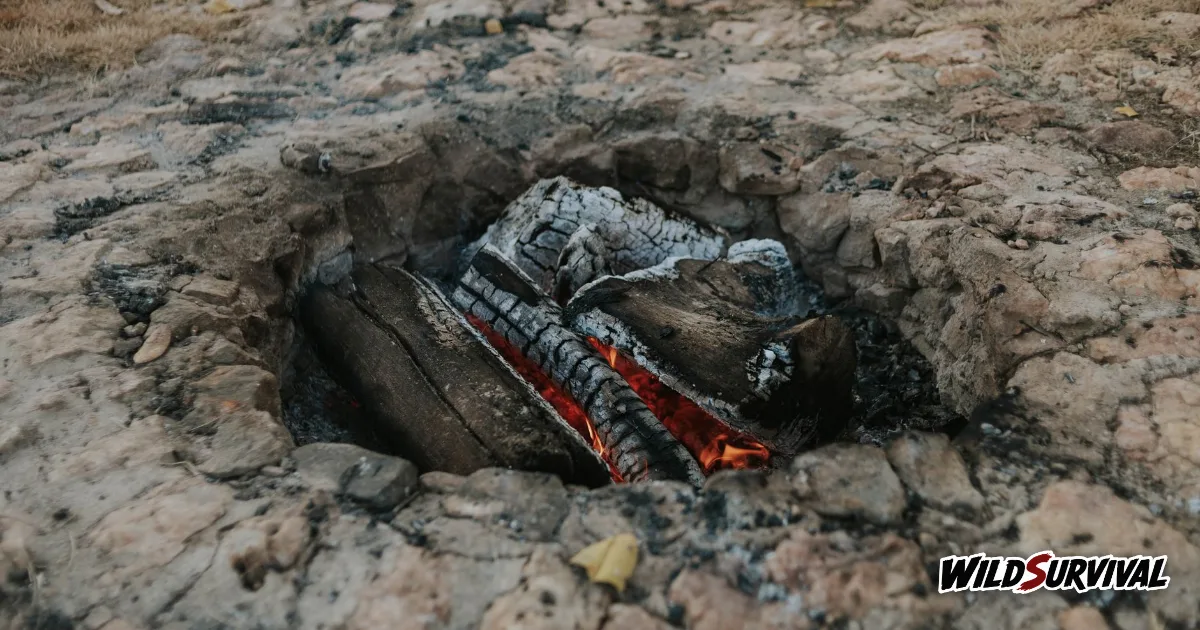
A Dakota fire hole is a fire built at the bottom of a hole in the ground, joined by a short tunnel to a second hole dug on the side the wind is coming from. Air rushes in through that second hole, feeds the base of the fire, and the flames stay below ground level. It gives you a low-profile fire that copes with wind and makes a steady cooking hob. In the UK the rules come first, though: in England and Wales the Countryside Code keeps fires to places where signs allow them, and in Scotland the access code rules open fires out of woods and off peaty ground.
How a Dakota fire hole pulls air through two holes
The US Army’s survival manual, FM 21-76, covers this set-up in its firecraft chapter as an underground fireplace or Dakota fire hole. The instructions are short: dig a hole in the ground, poke or dig a large connecting hole on the upwind side for ventilation, then build your fire in the first hole. The manual credits it with two strengths, namely that it conceals the fire and that it serves well for cooking.
What makes it work is draught, the same effect that keeps a chimney drawing. Air heated by the flames rises out of the fire pit, and that pulls fresh air in through the tunnel from the upwind hole. The airflow arrives right at the bottom of the fire, where the wood is actually burning. Wind usually fights an open campfire, whereas here it helps push air down the vent, provided you dug that vent facing into it.
Fire rules in England, Wales and Scotland
For England and Wales, the Countryside Code, last updated on 26 May 2023, keeps fires and barbecues to places where signs say they are allowed. The Code also reminds visitors that fires can be as devastating to wildlife and habitats as they are to people and property. A Dakota fire hole is still a fire, so on open country, in a forest or at a beauty spot, the answer is no unless the site tells you otherwise.
Scotland works differently, because access rights cover lighting a fire as long as you behave responsibly. The Scottish Outdoor Access Code guidance on open fires quotes the Code word for word: wherever possible, use a stove, and if you do light a fire, keep it small, under control and supervised. It adds that you should never light an open fire during prolonged dry periods, or in forests, woods, farmland, on peaty ground, near buildings or at cultural heritage sites, and that you should remove all traces before you leave.
The same guidance explains that a fire lit irresponsibly falls outside access rights, which can leave you open to an offence under Section 3(1) of the Trespass (Scotland) Act 1865. In practice, the Dakota fire hole is a technique to learn on your own land, or on private land where the owner has given you the go-ahead, well away from trees.
More articles on WildSurvival
- How Much Water to Drink When Hiking, and When to Drink It
- Walking Time in the Hills: Naismith’s Rule and Its Rivals
- Batoning: How to Split Wood With a Knife Safely
When a Dakota fire hole earns its keep
Wind is the main reason to dig one. A fire laid on the surface gets flattened by gusts and throws sparks around, while a Dakota fire hole burns below ground and takes its air through the tunnel. FM 21-76 notes that even a sheltered fire still needs enough wind to keep burning, and with this layout that wind goes exactly where the fire needs it.
Keeping a low profile comes next. The manual presents this fireplace first and foremost as one that conceals the fire, since the flames stay in the hole and never stand up above the ground. In a genuine survival situation where you would rather not advertise your position, that is its biggest selling point.
Then there is cooking, which the manual also mentions. A pot set across the mouth of the hole, or resting on two green sticks, sits right in the column of heat rising from below.
Digging a Dakota fire hole, one step at a time
FM 21-76 gives no measurements for this fireplace, so size the hole to your pot and to the length of your kindling, then work in this order:
- Pick firm, dry ground clear of trees and work out where the wind is coming from. The manual recommends clearing the brush and scraping back the surface soil in a circle at least 1 metre across, so the fire has little chance of spreading.
- Cut out the top layer of turf and soil in one or two neat plugs, and set them aside in the shade for later.
- Dig the fire pit straight down, wide enough to feed wood into, narrow enough for your pot to rest on the edges.
- On the upwind side, dig the second hole a short way off and angle a tunnel from it into the bottom of the fire pit. The manual calls for a large connecting hole, so keep that vent wide open.
- Light the fire at the bottom with dry tinder and small kindling, then add thicker sticks once the flames have taken hold.
- If you ring the rim with stones, use dry ones. The manual warns that wet or porous rocks may explode when heated.
On a damp day, getting it lit is the tricky part. Our guide to making fire in the rain covers finding dry tinder and shielding the first flames.
Roots, peat and parched summer soil
A fire set into the ground heats the earth around it directly, and that is where the real risk lies. The Scottish access guidance says that a fire on vegetated ground always leaves an impact unless it sits in a raised fire bowl, from scorch marks to burning down into peat or setting grass, heather or trees alight.
Stay away from the base of trees and from soil laced with roots. The same guidance points to damage at the base of trees where people light fires in the shelter of the trunk, and a root running out of your fire pit can carry that heat underground, out of sight.
Peat is the ground to rule out first for a Dakota fire hole. The Scottish Code names peaty ground among the places where an open fire should never be lit.
Dry spells change the picture too. The guidance lists places that have had a run of dry weather and carry volatile fuel, such as woodland, grassland, heather and peat, as areas at particular risk, along with hot, dry periods in spring and summer that kill off grass and dry out the woodland floor. Bare mineral soil, sandy or clay, well away from trees and after recent rain, gives the fire the least to feed on below the surface.
Putting out and filling in a Dakota fire hole
Let the wood burn down to ash, then drown both the fire pit and the air vent with water. Stir the ashes with a stick, pour on more water, and hold the back of your hand close to them. If you can still feel heat rising, the fire is not out.
The Countryside Code puts the standard plainly for barbecues: put it out and make sure the ashes are cold. Treat a Dakota fire hole the same way, and never backfill a pit that is still warm, because soil shovelled over embers only hides them from you.
Once everything is cold, push the soil back into both holes and firm it down, then lay the turf plugs back on top, grass side up, and water them so they knit back in. Before you leave, run your hand over the patch where the Dakota fire hole was. It should feel cold, smell of nothing, and show no ash at the surface.